

Frozen in Time: When Puberty Doesn't Happen
James Linehan's speech to the Bigger Picture Conference

As the global debate over puberty blockers intensifies, James Linehan’s powerful personal testimony, delivered in his speech at the Genspect Bigger Picture conference, underscores the critical importance of natural puberty for healthy psycho-sexual development.
I was a child trapped in amber while everyone else moved on. My entire adolescence felt suspended, as if the rest of the world had boarded a train to adulthood, leaving me standing on the platform watching it disappear. That sensation of being frozen in time is how I now understand what is being done to gender-dysphoric children with puberty blockers. What happened to me by accident is today being deliberately induced in healthy, developing bodies.
I have isolated hypogonadotropic hypogonadism (IHH), a condition in which the brain never sends the signal to start puberty. Without medical help I would have stayed forever pre-pubescent. My story is not just my personal history; it is a warning.
In the 1980s, my classmates shot up in height, their voices broke and they started dating and becoming independent. I did not. My legs grew long but the rest of me stayed childlike. I looked like a stretched-out little boy. I still played with He-Man figures in secret because emotionally and mentally I felt years younger than my peers. The social gap widened every year. I spent my whole school career in special education; reading is still, decades later, brutally hard for me.

At fifteen I remained at Tanner Stage 1, with no secondary sexual characteristics at all. After months of scans and tests at UCSF, the diagnosis was clear: my brain was not producing the hormones needed to trigger puberty. This was not “delayed” puberty that would eventually arrive; it was absent puberty. Without intervention, I would have had a child’s body for life. I would have had brittle bones and no sexual function, as well as the emotional maturity of someone much younger.
Doctors finally gave me testosterone in a bottle. My peers had crossed that bridge gradually years earlier. I sprinted across it as a teenager, clutching prescriptions, trying to catch a train that had already left.
What I’ve learned since is that when the adolescent brain is starved of sex hormones during the critical window, the damage is permanent. Autism is five times more common in people like me, ADHD several times higher, and severe intellectual disability nearly eighteen times more likely. A quarter of us never become sexually active, and three-quarters of us never have children. Executive function, attention, and processing speed are all measurably lower. I live with ADHD and learning disabilities that no amount of therapy will ever fix.
That same biochemical state—profound suppression of the hormonal axis—is now deliberately created in healthy children with drugs like Lupron. The Dutch protocol, on which the entire gender-affirming model rests, induces exactly what my body did naturally.
In the recent Supreme Court case United States v. Skrmetti, the government argued that it is discriminatory for a boy with hypogonadism to receive testosterone while a girl who identifies as a boy cannot. That argument is biologically nonsensical. I did not get hormones because I “felt like a boy”; I got them because my body was broken. Hypogonadism is a medical pathology, not an identity, and both sexes who have it receive treatment to restore normal development.
Advocates sometimes scoff that kids with “delayed” puberty turn out fine. My puberty was not delayed; it was absent. And yes, when it is absent, the brain is profoundly and permanently affected. Lupron in gender-dysphoric teens suppresses luteinizing hormone by roughly 98 percent—essentially flatlining a process the developing brain desperately needs.
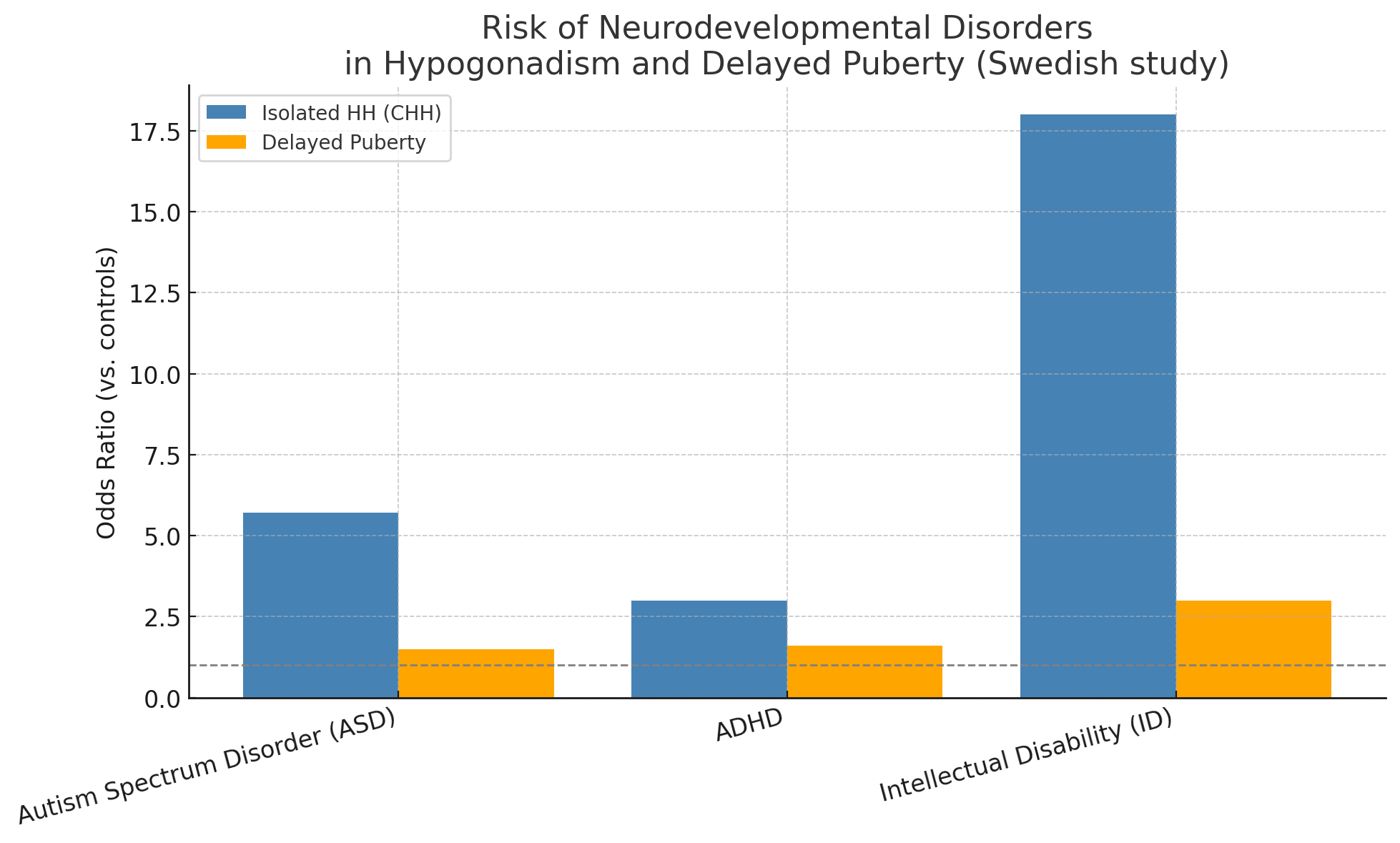
Every child put on blockers is exposed to the risk of developing the same lifelong neurological injuries that I have. The difference is that my condition was involuntary and theirs is elective—often sold to parents and children as a harmless, fully reversible “pause.” It is not a pause. It is a deprivation during a window that closes forever.
We have reached a point where the hormones that build adult bodies and brains are treated as optional accessories or obstacles to self-expression. I stand here as living proof of what happens when puberty never arrives. Deliberately inducing my condition in healthy children has to stop, or we will raise a generation robbed of the chance to grow naturally into the adults they were meant to become.
Thank you for listening to my story. I hope it makes clear what is truly at stake.
James Linehan is a public speaker and health advocate who draws on his personal experience with congenital hypogonadotropic hypogonadism (CHH), a DSD that can mimic puberty suppression effects. As a Santa Clara University adjunct lecturer, he brings a unique voice to advocacy and education.
This article is adapted from a speech delivered at the Bigger Picture conference in Albuquerque. It has been lightly edited for length. His speech will be released soon.
Watch his appear on the Beyond Gender podcast here
Genspect publishes a variety of authors with different perspectives. Any opinions expressed in this article are the author’s and do not necessarily reflect Genspect’s official position. For more on Genspect, visit our FAQs.
Puberty is Every Child’s Right.
Learn more about Genspect’s Memorandum of Understanding on the Role of Puberty. Show your support here.

Thank you for adding your story to this debate.