

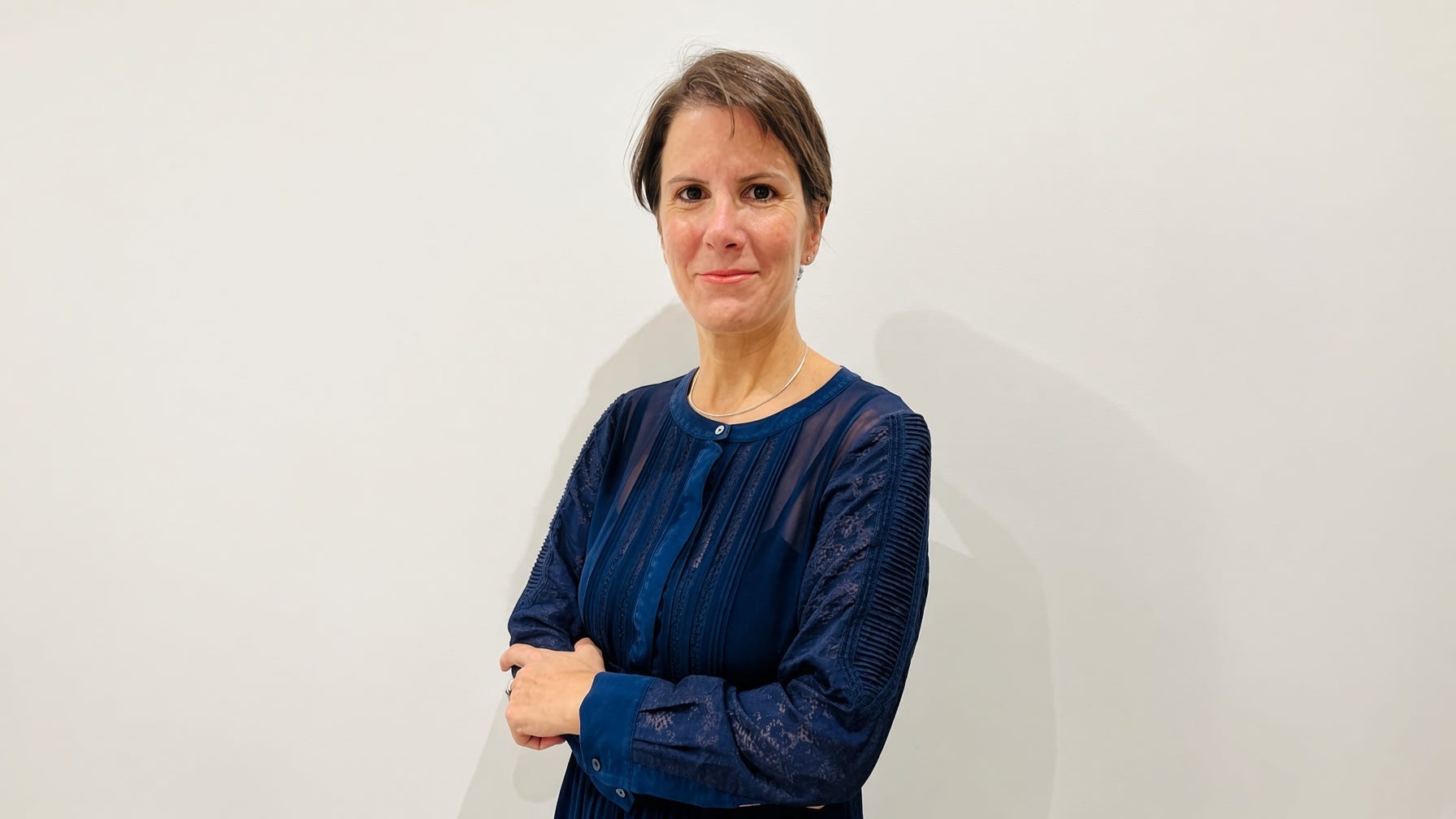
I oppose bans on conversion therapies — Reem Alsalem
Leia este artigo em português aqui
Reem Alsalem has had an extensive career dedicated to refugee rights and humanitarian protection with the United Nations High Commissioner for Refugees. However, it was as the United Nations Special Rapporteur on violence against women and girls, a position she has held since 2021, that she became particularly well known for her firm positions on the legal and material definition of the term ‘woman’, her documentation of the harms of gender self-identification on women and children, and her assertion of the need to maintain female-only spaces.
Following a recent appeal by Volker Türk, the United Nations High Commissioner for Human Rights, at the request of the Left Bloc, to retain the gender self-identification law, Genspect Portugal wanted to know what Reem Alsalem thinks about the issue.
The United Nations Special Rapporteur on violence against women and girls may be heard in the Portuguese Parliament at the request of Chega, a right-wing party that, along with the centre-right PSD and CDS, is seeking the return of the requirement for a psychiatric report for changing one’s name and gender.
Marisa Antunes (MA) : Portugal is in the process of repealing the current gender self-identification law, which does not require a psychiatric assessment, and returning to a version that previously existed (with a psychiatric report), in line with the majority of European Union countries. What is your opinion on this?
Reem Alsalem (RA): I would support and welcome the repeal or reconsideration of any laws on gender identity self-declaration. As I have repeatedly stated, although people should have the right to have a gender identity distinct from the sex they were born with, if they so wish, there is no right to self-declaration under international human rights law, particularly in legislation that does not provide for safeguards or intrinsic risk assessments and whether formalising the auto-recognition of a new gender identity entails access to single-sex spaces.
It is important to note that international law and global state practice also do not support the notion that gender identity self-declaration is a right. More importantly, where processes exist for the recognition of gender identity, international human rights standards recognise the right of States to include restrictive measures, provided that they pursue a legitimate objective and are a proportionate response to that objective, the objective in this case being upholding the right of females to equality, security, safety and dignity.
It should also be stressed that the Yogyakarta Principles are frequently invoked as justification for the premise that self-declaration is a human right. However, I would reiterate that the Yogyakarta Principles are not an international treaty that States have signed and therefore do not create binding obligations for States, nor are they a source of international human rights obligations for States. In fact, they were not even drafted by States. We often forget that one member of the body that developed the Yogyakarta Principles publicly withdrew their support, citing insufficient consideration of the impact of the Yogyakarta Principles on women’s rights.
There is, however, an important concern I have with both the previous law and the proposed amendments. Neither defines, recognises, or protects the objective and material category of sex in law. Sex is always biological sex, which means that it is inconsistent with a new category some States have devised of so-called “legal sex.”
Contrary to what some, including unfortunately ‘human rights’ experts, may claim, the duty not to discriminate against women and girls on the basis of their sex is firmly recognised in international law. When the duty not to discriminate on the basis of sex may conflict with rights based on gender identity or other grounds, international law does not permit sex-related protections, including the duty not to discriminate against females by virtue of being females, to be sacrificed. Some human rights experts may claim that where non-discrimination based on sex and non-discrimination based on gender identity clash, the latter should be prioritised, but the human rights conventions are very clear. A person who changes their gender identity should not be able to change their sex category.
A male who identifies as female may have a gender identity of a female, but he will always be of the male sex. Knowing the sex of someone, and continuing to collect data disaggregated by sex, is important- also in order to build sound policies and provide the best services, particularly health-related services.
Therefore, States must continue to record the sex of individuals and, where relevant, the gender identity, but they should not confuse the two. Sex matters in law because it matters in relation to pregnancy, reproduction, sexual violence, discrimination, and the provision of sex-specific services and protection. My position has consistently been that recognising sex as a biological reality is not incompatible with protecting people who identify as transgender. In fact, knowing the sex and gender identity of someone and the way they intersect is the right thing to do. Rather, a human rights framework should find ways to protect everyone’s rights without erasing the specific rights and needs of women and girls.
MA: The Portuguese Medical Association and the Portuguese Psychologists’ Association say they are following science and the guidelines of the World Health Organisation (WHO) and the World Professional Association for Transgender Health (WPATH) when they defend gender self-determination. What is your view of this position?
There is an important distinction between saying that a specific identity or experience should not be pathologised and saying that all physical and psychological distress, including any distress related to the body or gender, has only one viable path: affirmation and submission to chemical and surgical interventions.
Important independent scientific reviews around the world have identified significant harms and risks associated with gender-affirming medical interventions (or, as the U.S. Department of Health described them, “sex-rejection interventions”). In children and adolescents in particular, puberty blockers are associated with reduced bone mineral density and have been shown to affect psychological well-being, cognitive development, fertility, and long-term sexual development; cross-sex hormones can also affect fertility, bone health, and cardiometabolic health. For adults, systematic reviews document effects on cardiovascular and reproductive health, including changes in fertility and reproductive function.
Taken together, the evidence does not justify presenting these interventions as risk-free or reversible: quite the opposite. The recent change in WPATH’s position regarding its own “Standards of Care” is significant. For decades, WPATH’s Standards of Care were treated internationally as an authoritative framework for the medical treatment of gender dysphoria, including by governments, policymakers, and healthcare institutions. WPATH has now stated that they are merely guidance, rather than mandatory standards, which demonstrates that the organisation has recognised that the evidence was, at best, uncertain and, in several areas, damning.
MA: But returning to the WHO: two years ago you joined doctors and other organisations in strongly criticising the guidelines issued by the WHO for lack of impartiality. In fact, half of the 21 members of the WHO panel belong to LGBT associations and have no medical experience, while several of the remaining members are from WPATH…
RA: In my letter of 4 January 2024 to the World Health Organisation, I expressed serious concerns about the WHO’s proposed guidelines on the health of transgender and gender-diverse people, particularly concerning the composition and independence of its Guideline Development Group, the transparency of the process, and the apparent lack of meaningful consideration of different scientific and human rights perspectives.
I was particularly concerned that the panel did not appear to include representatives of perspectives advocating greater caution regarding the medicalisation of children and adolescents with gender dysphoria, or the protection of women-only spaces and sex-based rights.
More broadly, I urged the WHO to ensure that any guidelines should be based on robust, independent, and comprehensive evidence, adequately address the potential risks and long-term consequences of medical interventions, particularly for children, and did not treat controversial propositions concerning gender identity, sex, and self-identification as medical or human rights issues that had already been settled.
MA: What was the WHO’s response?
RA: I was pleased with the WHO’s subsequent clarification that the guidelines would focus on adults and would not address children and adolescents. The guideline-development process was subsequently reviewed, but, as far as I have been able to ascertain, the guidelines for adults have still not been finalised or published.
MA: In Portugal, following the international pattern, the majority of cases of transition that have emerged are female-to-male. Some argue that this is because girls are more vulnerable to social media and social contagion…
RA: I believe this issue deserves much more serious investigation than it generally receives. We should be extremely cautious about attributing the increase in female-to-male gender identification among young people to a single cause.
However, there is no doubt that social media use, particularly during the COVID-19 pandemic, as well as peer dynamics, influenced how vulnerable adolescents, especially girls, understood themselves and their physical or mental distress, and what they considered to be solutions.
There is also no doubt that coercive social circumstances and the pressure of sexist stereotypes in the media, including social media, further contribute to a significant increase in the number of young women who “consent” to life-altering medical interventions, including the removal of reproductive organs.
MA: Something you referred to at the UN…
RA: Yes. As I mentioned in my 2025 report to the Human Rights Council, female adolescents who experience distress about puberty or their emerging sexual orientation may develop temporary gender dysphoria during adolescence.
At least 70% of the women who attended the world’s largest gender clinic (the Gender Identity Development Service) in the United Kingdom (at Tavistock) were sexually attracted to other women. I believe the figures in Portugal are similar, with girls making up the majority of young people “transitioning.”
In the United Kingdom and other countries, follow-up studies have also found that gender-related distress in childhood diminishes with puberty in the majority of cases, indicating that, for a large proportion of girls and young women experiencing this distress, accepting and coming to terms with a shared sexual orientation may be an important part of sexual development.
This means that we should carefully investigate all possible causes, rather than assuming that one explanation applies to every case. There may be different reasons for discomfort and distress, and medical, psychological, and psychiatric professionals should have the space and freedom to explore all the reasons with the person concerned, without jumping to conclusions.
This is also why, although I support protection against coercive and abusive practices, I oppose bans on conversion therapies that are defined so broadly that they criminalise legitimate therapeutic exploration.
MA: Portugal is one of a group of eight countries among the 27 EU Member States that have already passed a law against conversion therapies. Here, “therapeutic exploration” risks exposing healthcare professionals to a prison sentence of up to three years. The issue has generated considerable polarisation…
RA: Adults, but especially children and adolescents, experiencing distress related to their bodies and gender should be allowed to discuss their feelings, sexuality, trauma, neurodiversity, and other underlying issues without healthcare professionals being compelled to affirm a particular identity or prohibited from considering whether transition is appropriate.
Otherwise, in trying to prevent one form of conversion, we risk creating another—particularly for young people who are attracted to the same sex, who may be discouraged from accepting their sexual orientation and encouraged toward gender transition. Ironically, this could result in a form of conversion therapy (in the opposite direction), which is obviously highly problematic and should be prohibited by law.
MA: The gender self-identification law passed in 2018 also led to an increase in the number of children and adolescents receiving puberty blockers. The Medical Association opposes the ban on hormonal blockers that may occur once the repeal process is finalised. What do you think about that?
RA: Even before WPATH’s most recent change in position, the demonstrably harmful consequences of chemical and surgical interventions on children related to gender affirmation were already known. This led many countries to restrict children’s access to cross-sex hormones, puberty blockers, and surgical interventions.
Therefore, Portugal’s decision to restrict children’s access to “gender-affirming” interventions is reasonable, legitimate, and necessary.
I would remind all governments that when legislation affects children, governments have a particularly high duty of care. Children cannot consent. Therefore, they should not be treated as adults.
Moreover, there is a gold standard in international human rights law: all interventions undertaken on behalf of children must be guided by the best interests of the child.
Children have the right to safety, protection, and freedom from exploitation and abuse, including sexual abuse. They also have the right to the highest attainable standards of health. Sterilising children and preventing them from entering puberty can hardly guarantee the highest attainable standard of health to which they are entitled.
MA: There are five biological males in women’s prisons, including some with histories of rape. If the repeal is not approved, what can be done?
RA: This is precisely where the distinction between identity and sex becomes a concrete human rights issue. Women prisoners are not an abstract category. Many have histories of sexual violence, abuse, and trauma. They are among the most vulnerable women in the world.
Despite being incarcerated, they continue to have the right to privacy, dignity, and protection from violence, including male violence.
My recent work on California’s prison system, where men who identify as women have been housed with women, makes clear that forcing women to share intimate spaces with biological males can expose them to foreseeable sex-specific risks and can also retraumatize women who have already experienced male violence.
My position is therefore that women-only spaces should remain protected where they are necessary and proportionate to protect women’s safety, dignity, and privacy.
This is not discrimination, but differentiation that is lawful under international human rights law. It is recognition of the reality that sex can be directly relevant to the risk of violence and the protection required by survivors.
While I recognise that this should not automatically mean that men who identify as women should be housed with men, consideration for their safety cannot and should not come at the expense of women.
Marisa Antunes is an award-winning investigative journalist and a team member of Genspect Portugal. Reem Alsalem is the United Nations Special Rapporteur on violence against women and girls.
Genspect publishes a variety of authors with different perspectives. Any opinions expressed in this article are the author’s and do not necessarily reflect Genspect’s official position. For more on Genspect, visit our FAQs.
I agree with Alsalem that we must not abandon the sex register. And I would like to develop why.
Before answering that question, we would need to agree on what we call gender.
Although there are various definitions, I believe we can agree that, basically, it is about our behavior. If we specify a little more, we could say that it is about our behavior... in relation to sex.
Consequently, we must also define sex and then see how the two relate to each other.
Sex has always been the reproductive function in its binary form. That is, it is the form of reproduction in which two individuals with complementary sexual configurations necessarily participate: one must be of the "male" type and the other individual must be of the "female" type. Each "type" is characterized by a specific configuration for the production of a type of gamete.
The relationship between sex and gender is the result of evolution, of the process through which different models impose themselves over others based on their better adaptability.
Gender would then be the behaviors that individuals of one sex and the other developed to facilitate sexual reproduction. These mechanisms are dimorphic; that is, each sex developed its own behaviors. So we can speak of behaviors that are typically of one sex or the other.
But at the same time, we know that—for various reasons—there has always existed a minority of individuals in all populations whose gender inclines, to varying degrees, toward the characteristics of the sex opposite to their own.
It is also necessary to highlight two things: 1) that behavioral characteristics gradually become manifest throughout the lives of individuals, and 2) that in any case, the individual's sex is fundamental for a wide series of things, including behavioral ones (even though gender may be atypical).
At this point we could perhaps begin to answer the question from the beginning, but it is necessary to clarify a confusion: when some speak of "changing gender," what they are actually proposing is to eliminate the sexual marker or register and replace it with the gender register.
There is a wide variety of reasons why eliminating the sex register would be problematic. Then, the question would be: is it advisable to add a new marker that makes people's gender explicit? And to enable name changes?
My main answer is this: We must not abandon the sex register.
Regarding adding gender and enabling name changes, my answer is ambivalent: I would see no problem with it as long as there is clarity about what sex and gender mean—a matter that is clearly not clear... since what is proposed is "changing gender," when in reality they are proposing something else.