



(This article is a revised and updated version of the original German article first published by the German parents’ initiative TTSB)
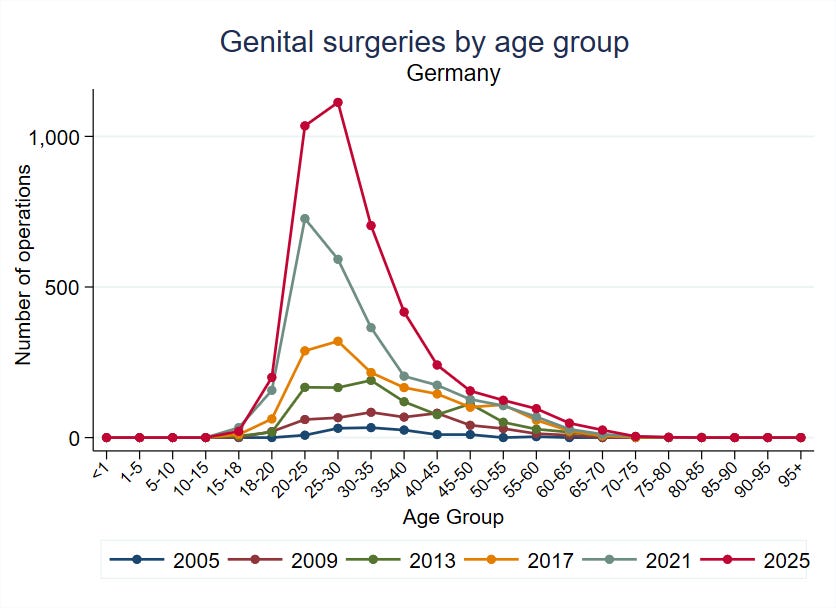
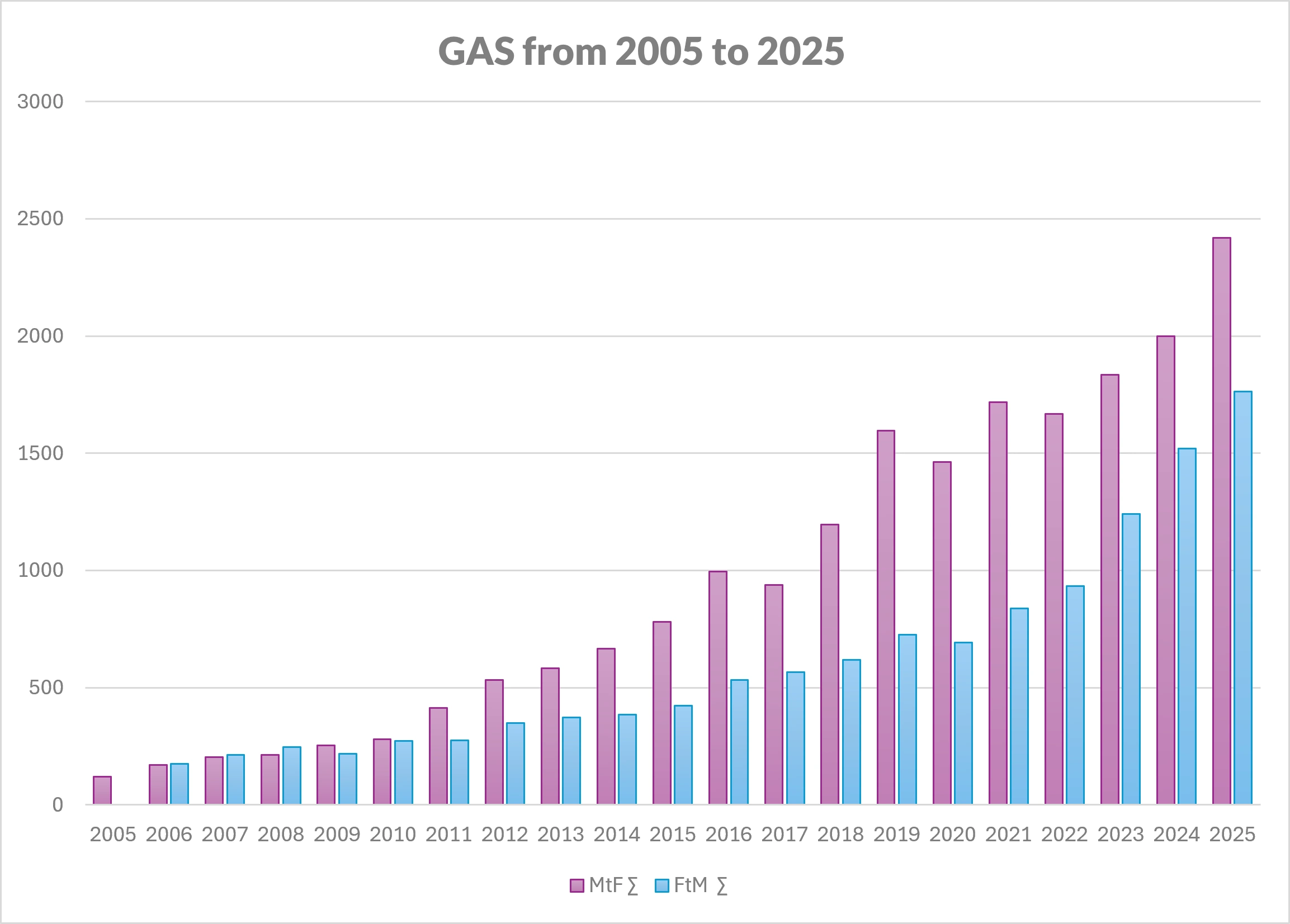
Paul Steger, a PhD student in empirical economics at the University of Mannheim, has plotted and analysed publicly available data from Destatis (Germany’s Federal Statistical Office) on transgenital surgery (vaginoplasty and phalloplasty) between 2005 and 2025. He found that, while there were only 120 such operations in 2005 — predominantly on people aged over 30, or even 40 — the figure had risen to 3,075 by 2023. This increased further to 3,520 the following year, and by 2025 there was a further 19 per cent increase on the previous year, totalling 4,184 operations. In recent years, the highest number of procedures has consistently been found in the 18 to 25 age group.
“While the prevalence has increased across all age groups, nothing compares to the explosion in the 18-25 age category. From just 8 operations in 2005 to over 985 in 2023, this represents a staggering percentage increase of 12,312%.”
In Germany, 9,327 such procedures were carried out between 2016 and 2020. In the USA (which has four times the population), an estimated 16,872 transgender genital surgeries (vaginoplasty or phalloplasty) took place (the actual figures are even higher in each case, as they do not include, for example, privately funded operations).
It is important to note that this data does not include mastectomies or hormone treatment. Genital surgery is usually the last part of the medical transition process. This means that many more people will have gone through earlier interventions, such as hormone treatment, or other surgical interventions.
Most Genital Surgeries Are Among 18–25-Year-Olds
Not only has the number of transgender genital surgeries risen sharply over time, but there has also been a striking shift in the age demographics: genital surgeries are now most common amongst 18–25-year-olds.
These trends continued between 2023 and 2025; see updated graphs below:
In recent years, there has been a slightly sharper rise among female patients. However, when breaking down the figures by gender, it is not possible to be entirely certain to what extent people’s self-identification has been taken into account. Paul Steger suspects this is the case because, for example, when examining the surgery statistics for hysterectomies separately, he discovered figures for ‘male’ patients.
What Are Laws Actually For?
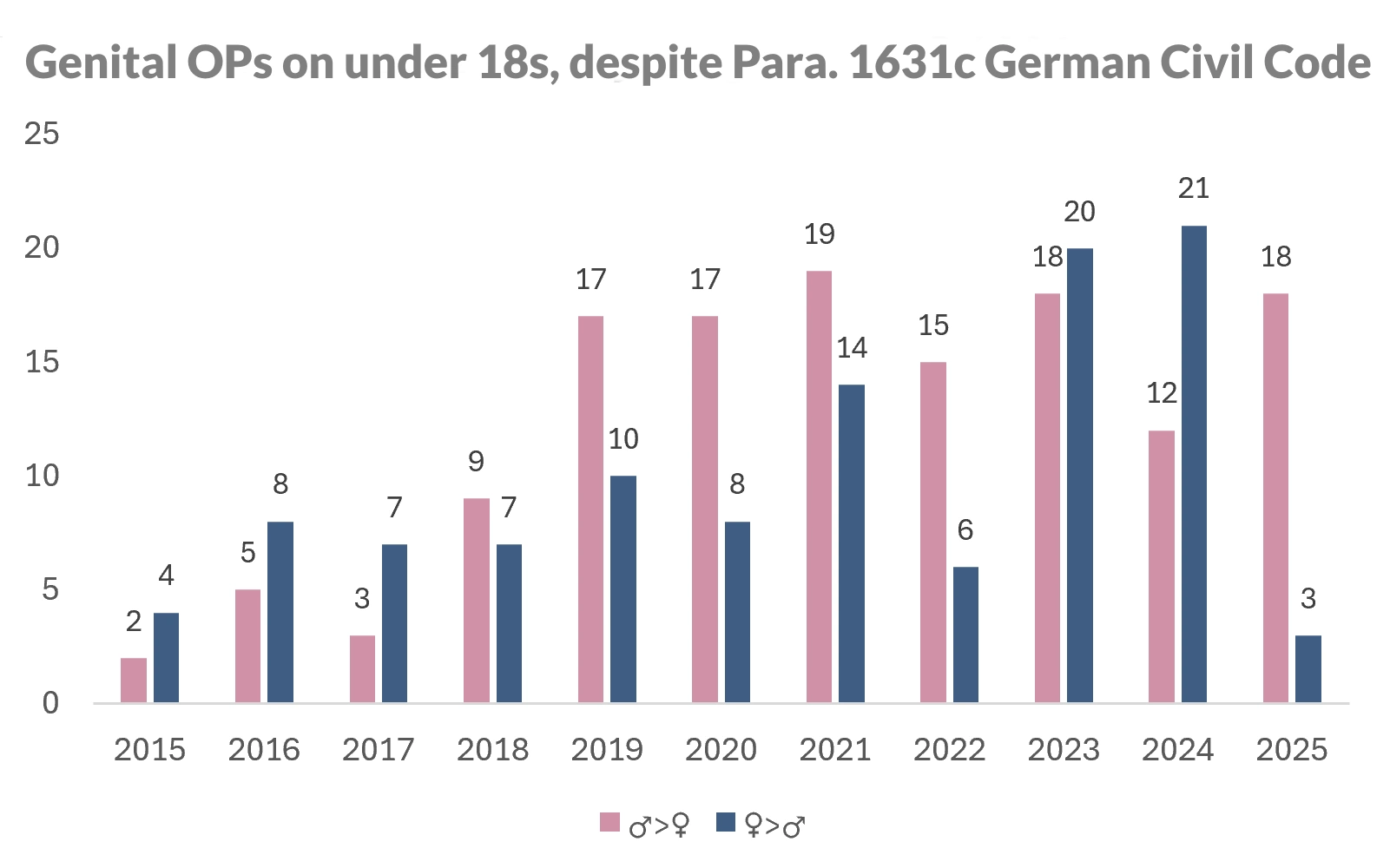
Although operations that sterilise individuals under the age of 18 are strictly prohibited in Germany (Para. 1631c of the German Civil Code) and the Castration Act might be relevant in some cases, there is evidence that such operations have been carried out – child protection measures were conspicuous by their absence. Paul Steger notes:
“After submitting an information request to the German Department of Justice (which I personally made), they confirmed that such operations are technically against the law. Yet, in another example of trans exceptionalism, these procedures seem to circumvent clear and pervasive legislation. More importantly, they are officially documented in administrative data, and still, policymakers and journalists remain largely oblivious to the phenomenon.”
Paul Steger explicitly points out that, in the Federal Statistical Office’s DRG flat-rate case statistics, surgeries due to ambiguous genitalia in people with disorders of sex development (DSD) are assigned their own code and are therefore not included under the ICD code, see OPS code 5-646.
Is Germany on the Way to Becoming a Special Case in Paediatric Gender Medicine?
Paul Steger concludes that, rather than following the lead of its European neighbours, Germany has gone its own way, “setting itself apart from the rest of Europe”.
The current Social Democrat / Christian Democrat German government is in the midst of a complex process of reform and public spending reviews. Health and public pension spending are particularly in the focus of the government and cuts are expected.
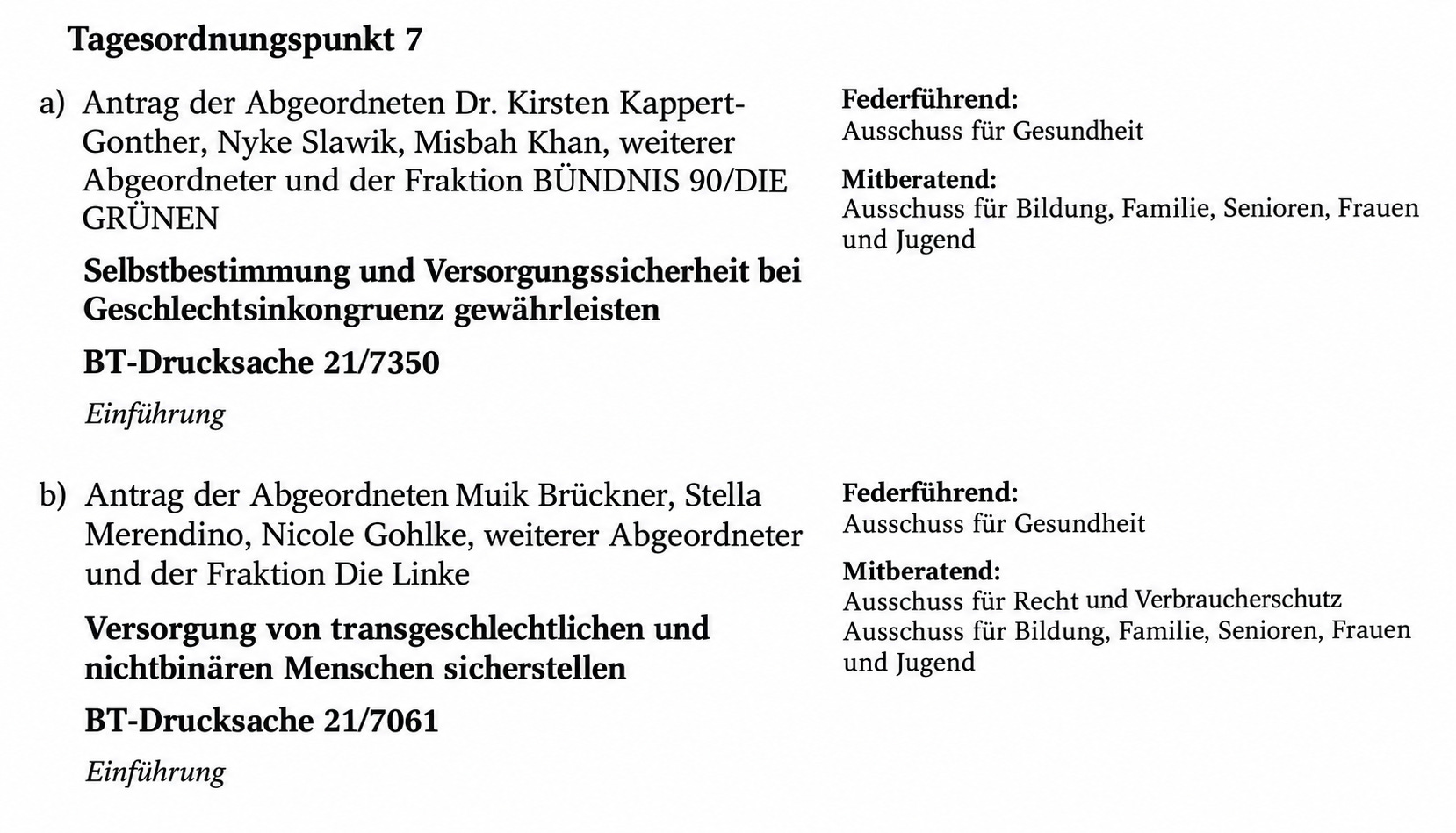
In this context, it is notable that on Wednesday 7 October, the Greens and the Left parties introduced two legal proposals in the German Bundestag calling for health insurance to provide reliable coverage for non-evidence-based transgender procedures, including those for so-called non-binary people. The ‘non-binary’ category opens up a world of possibilities for elective cosmetic surgery and manipulation of the healthy hormonal system. The Bundestag session was not open to the public.
Public health insurance providers are not required to pay for transgender procedures in Germany at the present time. This has been the case since a court decision by the Federal Social Court in 2023, in which the court ruled that transgender treatments – especially for nonbinary people – are a new kind of treatment that must be subject to a methodological evaluation procedure by the Federal Joint Committee, which is the highest decision-making body of the joint self-government of physicians, dentists, hospitals, and health insurance funds in Germany. Given the paucity of evidence for sex-denying medical interventions, such an evaluation would not be expected to be positive. The responsible Christian Democrat health minister has consequently instructed the Federal Joint Committee to produce ad hoc guidelines that will allow transgender procedures to be financed from public funds anyway. In doing so, the Christian Democrat minister has bypassed normal democratic procedures by avoiding an awkward debate in the German parliament on medical interventions on minors in Germany.
The most likely explanation for this political move is the Christian Democrats’ desire to avoid conflict with its highly pro-transgender Social Democrat government partners. And with a supine press, the party knows that it can get away with this policy without the German public hearing anything much about it. However, with moves to restrict paediatric gender medicine afoot in other European countries, “Germany’s size, resources and healthcare infrastructure … could therefore turn it into an important destination for gender-related medical procedures”, which would incidentally boost its position as Europe’s export champion.
The press situation in Germany is such that you, the reader, now know more about what is happening in Germany than does the bulk of the German public itself.
David Allison is a former member of the German Green Party and speaker for Transteens-Sorge-Berechtigt (TTSB). TTSB is a parents’ initiative in Germany that opposes the unnecessary medicalisation of adolescents and young adults who question their gender and/or do not conform to gender stereotypes.
Genspect publishes a variety of authors with different perspectives. Any opinions expressed in this article are the author’s and do not necessarily reflect Genspect’s official position. For more on Genspect, visit our FAQs.
