

We May Never Pass This Way Again: Thoughts On Genspect
by Matt Osborne
The last time I saw Albuquerque, I was just passing through on my way to and from Netroots Nation, the world’s largest conference of online activists. It was 2010, the car was a 2005 Ford Mustang with a dodgy A/C, and we made a detour to visit Area 51. Even at the time, ‘progressive’ politics were becoming somewhat alien to me. It took a while longer for me to understand just what had gone wrong.
I recollect a Hunter S. Thompsonesque series of scenes. David Roberts, the green energy guru, declared there would be no sixties-style revolutionary transformation. Were those giant bats I saw spinning over the desert, or windmills? I wondered. Then there was the giant pyramid beaming a signal to outer space, powered by a coal-fired thermal power plant at the edge of town, a sight which gave me Warhammer 40k vibes. Some beautiful mountain had been destroyed to create this monument to excess.
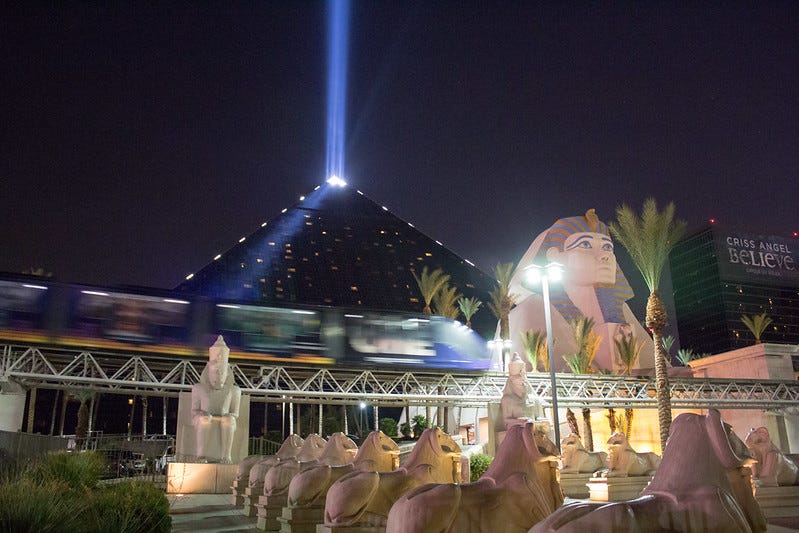
In Vegas, at the MGM, I struggled to contain my dislike of the surroundings. At the half-hour, scantily-clad dancers would emerge from doors in the walls like the automatons of a grand medieval clockwork, hanging from cages. Trust Las Vegas to make safety harnesses into BDSM gear. As a distraction, I wandered the vendor floor asking every organization and organizer about the fat checks from George Soros that Glenn Beck said they were receiving.
I had nearly three dozen conversations, almost all of them on the record. Just two people confirmed that their entities had received Tides Foundation funds – and both of them complained to me that the checks were not large enough. That generally fit with what I had seen in the day-long rally, protest march, and mass arrest in front of the White House by “Appalachia Rising.”
Thousands of students were bused into Washington. They made signs, but there were plenty of pre-printed signs around. At the end of the event, one hundred environmental and community activists were arrested by the Capitol Police. At the time, these kinds of events were used as graduation-level exercises for cadets, who would be newly-trained and aware they were on camera at every moment. Some, though by no means most, of the people arrested were professional agitators.
I began editing the video I took. The final cut is still available at a shitlib website if you want to pay them to see it. So I was not present in person the next day, during the usual after-action assembly of affinity group leaders, when there was a triumphant announcement that a Soros money check had at last arrived for Appalachia Rising. The amount on the check covered the room and their lunch. That was the state of funding in real progressive spaces before 2011. You had to work for it and be satisfied with pennies.
After 2015, when the progressive funding spigot suddenly turned into a gushing pipeline of rainbow-flavored transqueer identitarianism, things were very different. Formerly-close comrades turned on one another as soon as dimes rolled across the floor. People got funding out of proportion to their promise. There was so much social capital in venture capital a decade ago that it warped the incentives. I know because I saw it happen.
The man who prevailed on me to drive out to Vegas, who hosted me in Washington, DC, and introduced me to R.F.K. Jr. the next year at the premiere of an anti-coal documentary in Charleston, West Virginia, was an anti-coal activist and podcaster who lived up in a holler. A fiftyish father of three with a white beard, he ‘became a woman’ about five years ago. It is my understanding that he makes more money now than he ever did as a man.
Strangely, the voice he now uses throughout his podcast is the same voice that he once used for ‘Karen’, his recurring character, a lampoon of conservative white women. I have confirmed over the years that some of the core people involved with organizing Appalachia Rising also became Trump voters, just like R.F.K. Jr. The more people change, the more they stay the same.
All of this is to say that I recognize authenticity in social movements as well as lasting potential in social movements, and abhor the effect that a major donor might have on our activist space. I have been to Genspect three times now, and while the content presented there has always been outstanding, the conversations on the sidelines are what really make the event special. Authentic. Visceral. Human. The one helpful thing a well-intentioned donor might do for Genspect is just make it much bigger.
You connect with people you have only known online, creating personal trust connections that are better than online connections. People share interests and outlooks. I was proffered a tantalizing investigative journalism story from someone who needs to remain anonymous. This is how the work gets done: by getting together and comparing notes and sharing what works. As long as it goes on, Genspect will bring like-minded people together for networking.
Appalachia Rising was a pop-up movement. It was not sustained because the big environmental organizations took up their anti-coal cause, raised a pile of cash on the basis of defeating the coal dragon, and declared victory over it. Of course, Appalachia still produces at least as much coal by mountaintop removal mining today as the region did before. Mining companies still turn thriving ecologies into moonscape so the Luxor can say hello to Zeta Reticuli. What changed was the fashion-season of the cause.
While pop-up movements might be easily associated with ‘astroturfing’, the artificial creation of ‘grassroots’ social movements, Appalachia Rising did include a number of people affected by the toxic sludge and erosion that mountaintop removal mining leaves behind. They were of course all white people, though, so none of them was the lead organizer. Instead, they had chosen a very capable young black woman as their intersectional figurehead, and there was traditional Native American music, because of course there was.
I wonder about the term ‘pop-up movement’ in relation to Genspect. (To be clear, it is my own term.) Friendships and connections made at Genspect will last for as long as the people who attend the conference survive. I have almost no friends left from the progressive world, where the revolution must never end. It is my impression that Stella O’Malley and about 95 percent of the people attending Genspect would like to see the end of the ‘gender revolution’ and the restoration of sanity in medicine, schools, sports, and spaces. They want to slay the dragon that eats children. Genspecters generally do not intend to milk the dragon forever, keeping it as a pet cause until they die.
They are parents who want their kids back, detransitioned people who want their healthy bodies back, families and professionals who want their lives back, and cannot have those things back, because of the gender dragon. State, society, and increasingly even the church have for years encouraged children towards dissociation, ideation, and rumination on ‘gender identity’, with catastrophic effects on mental health and long-term well-being. We are united in loss; we are given purpose by our mutual tragedy.
I want this dragon dead. I want it coiled in rictus around the lance through its cold heart, inert, a rotting carcass covered in consuming, buzzing flies. I want it destroyed so I can go do something else. I suppose that most of us at Genspect would like to not have to still be meeting in ten years. If Genspect has served its purpose and no longer exists in two decades, good. I don’t want to be part of any organization that is still lingering around, turning into a monster like Stonewall or GLAAD by trying to find new things to do. Let ours a pop-up movement, and because of our grassroots success.
And if we ever have a reunion, let it be in Albuquerque. A very nice and relaxed town with very friendly people. My hat is off to everyone who put together an incredibly safe, amazingly secure conference for courageous folks. Dragon-slayers. We are a motley crew united by a mission, but all good journeys have an end. Let us maintain these connections, and may we meet again in even better times.
Genspect publishes a variety of authors with different perspectives. Any opinions expressed in this article are the author’s and do not necessarily reflect Genspect’s official position. For more on Genspect, visit our FAQs.
I read this aloud to my husband and got choked-up in tears three times before I could finish. A motley crew indeed. I think that speaks to a common humanity though, doesn't it? Like, even with our differences, there are just some things that evoke a united "Oh, hell no!" when we discover serious, horrifying, harm being done to the vulnerable.
Thank you, Genspect, for being a steady voice of reason and compassion. Thank you for working to prevent further harm and for caring about those already harmed by this ideology.
Perhaps years from now, there will be a Genspect reunion and we can all come together and reflect on how we defeated hell on Earth.